The Psychology Behind Gambling: Why We Bet
Gambling is an age-old human pastime, stretching from ancient dice games to the glitzy digital casinos of today. But why do people gamble, even when the odds seem stacked against them? The answer lies deep within the interplay of psychology, neuroscience, social influences, and human nature itself. This article explores the psychology behind gambling, examining what drives us to place bets, why some become addicted, and how our brains react to risk and reward.
The Allure of Uncertainty: How Risk and Reward Shape Gambling Behavior
One of the most compelling aspects of gambling is the uncertainty of the outcome. Psychologists refer to this as "variable ratio reinforcement," a concept rooted in B.F. Skinner’s behavioral studies. When rewards are unpredictable, as in most gambling games, the brain releases higher levels of dopamine—the neurotransmitter associated with pleasure and motivation.
According to a 2019 study published in $1, the brain’s reward system is more strongly activated by unpredictable rewards than by predictable ones. Slot machines, for instance, are designed to deliver wins at random intervals. This unpredictability keeps players engaged, hoping that the next spin could be the lucky one.
.png)
In fact, the American Gaming Association reported that in 2022, U.S. casinos generated a record $60.4 billion in revenue, a testament to how powerful the allure of uncertainty can be for millions of people.
The Role of Cognitive Biases: Why We Think We Can Win
Our brains are wired with cognitive shortcuts—known as biases—that help us make decisions quickly. However, these biases can also lead us astray at the casino.
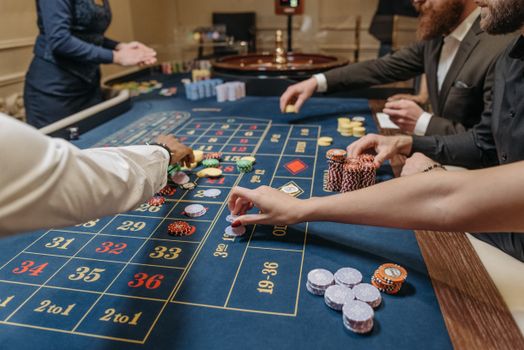
The Gambler’s Fallacy is a classic example. This is the belief that if something happens more frequently than normal during a given period, it will happen less frequently in the future, or vice versa. For example, after seeing a roulette wheel land on red five times in a row, a player might incorrectly believe that black is "due" for a win.
Another common bias is the Illusion of Control. Many gamblers believe they can influence the outcome of a game of chance through skill, superstition, or ritualistic behavior. Studies show that up to 70% of bettors in skill-based games, like poker, overestimate their ability to control outcomes—even when luck is the dominant factor.
The Confirmation Bias also plays a role. Gamblers tend to remember their big wins more vividly than their losses, reinforcing the belief that they’re more successful than reality suggests. This selective memory can fuel continued betting, even in the face of mounting losses.
The Social Side of Gambling: Community, Competition, and Status
Beyond individual psychology, social factors heavily influence gambling behavior. For many, gambling is a social activity—a way to bond with friends, compete, or gain status.
Casinos and betting establishments are designed to foster a sense of community and excitement. The sounds of slot machines, cheers from a winning table, and the overall buzz create an atmosphere that encourages participation. In a 2021 survey by YouGov, 47% of respondents said they gambled "for fun with friends," highlighting the importance of social connection.
Online gambling platforms have further expanded these social elements, offering multiplayer games, tournaments, and live dealer experiences. Leaderboards and achievements tap into our innate desire for social comparison and recognition, keeping players engaged and competitive.
Biological and Neurological Drivers: What Happens in the Brain When We Gamble?
Gambling triggers a cascade of chemical reactions in the brain, closely resembling those seen in other forms of reward-seeking behavior, such as eating or using certain drugs.
When a person places a bet, the anticipation of a possible win releases dopamine, which not only makes the experience pleasurable but also reinforces the behavior. Functional MRI studies have shown that the brain’s reward circuits—particularly the ventral striatum and prefrontal cortex—are highly active during gambling, especially when wins are unexpected or losses are narrowly avoided.
For some individuals, these neurological responses can become problematic. According to the National Council on Problem Gambling, about 2 million U.S. adults (1% of the population) meet the criteria for severe gambling addiction, and another 4-6 million (2-3%) are considered to have mild or moderate gambling problems. These issues are often linked to changes in the brain’s reward system, making it harder for affected individuals to resist the urge to gamble despite negative consequences.
Comparing Gambling Motivations: Why Do People Bet?
Not all gamblers are motivated by the same factors. Research has identified several distinct motivations, ranging from the thrill of risk to the search for social connection or escape from daily stress. The table below summarizes the primary motivations and their prevalence among gamblers, based on a 2017 study published in the $1.
| Motivation | Description | Estimated Prevalence (%) |
|---|---|---|
| Excitement/Thrill | Seeking adrenaline and the rush of uncertainty | 59 |
| Social Interaction | Gambling to bond with friends or meet new people | 47 |
| Financial Gain | Desire to win money or solve financial problems | 35 |
| Escape/Avoidance | Using gambling to forget worries or stress | 23 |
| Skill/Challenge | Enjoying the challenge or testing abilities | 18 |
These motivations often overlap, and a person’s primary reason for gambling can shift over time or depending on the context.
When Gambling Becomes Problematic: Understanding Addiction and Its Risks
For most people, gambling is a harmless form of entertainment. However, for a significant minority, it can spiral into a serious behavioral addiction. Problem gambling is characterized by a loss of control, persistent betting despite negative consequences, and a preoccupation with gambling activities.
Several psychological and environmental factors increase the risk of gambling addiction:
1. Early exposure: People exposed to gambling at a young age are up to four times more likely to develop gambling problems as adults. 2. Comorbid mental health issues: Depression, anxiety, and substance abuse often co-occur with problem gambling. 3. Accessibility: The easier it is to gamble (e.g., online casinos, smartphone apps), the higher the risk of developing problematic behaviors.The consequences of problem gambling are far-reaching. The National Council on Problem Gambling estimates that roughly $7 billion is lost each year in the U.S. due to gambling-related social costs, including bankruptcy, crime, and lost productivity.
Responsible Gambling: Harnessing Psychology for Safer Play
Understanding the psychology behind gambling has informed the development of responsible gambling tools and practices. Modern casinos and online platforms increasingly offer features designed to help players stay in control, such as:
- Deposit and loss limits - Self-exclusion programs - Reality checks and session time reminders - Access to support resources and counselingEducational campaigns focus on debunking gambling myths, raising awareness of cognitive biases, and encouraging players to recognize the signs of problem gambling. The goal is to create a safer gambling environment while preserving the entertainment value of betting.
Final Thoughts on the Psychology Behind Gambling
Gambling is a complex human behavior shaped by centuries of tradition, powerful psychological forces, and ever-evolving social contexts. Whether it’s the thrill of risk, the hope of hitting the jackpot, or the camaraderie of a poker table, our motivations for betting are as diverse as they are fascinating. By understanding the psychological mechanisms at play, we can make more informed choices—and help protect those at risk—from the darker side of this universal pastime.